Invited Speakers
Keynote Speaker (1)
Computational Intelligence: Innovations and Challenges
Abstract: Major industries such as automotive, oil, telecommunications, banking, e-business, automation, and recent smart applications in artificial intelligence, machine learning, deep learning, robotics, internet of things and smart devices, image processing, smart environment and technology, and many others are highly dependent on intelligent computer software for their basic operations. Moreover, the integration of artificial intelligence and block chain are proving to be quite a powerful combination for improving virtually every industry in which they are implemented. The size and complexity of computer-based systems have been growing at a faster rate during the past decade and this trend will certainly continue in the future. It is desirable to have software systems with highest possible reliability. To enhance the software reliability and quality, a focus can be directed towards software validation methods. This keynote presentation will address fundamental concepts, limitations, and challenges involved in the reliability of intelligent software systems including artificial intelligence, machine learning, robotics, and IoT with related applications. Many issues and limitations of software validation techniques involved in maximizing the reliability of a large and complex intelligent software system will be explored to focus on the research challenges in the future. The discussion and presentation should help identify new and innovative research directions for further study and development in computational intelligence with wide range of applications.
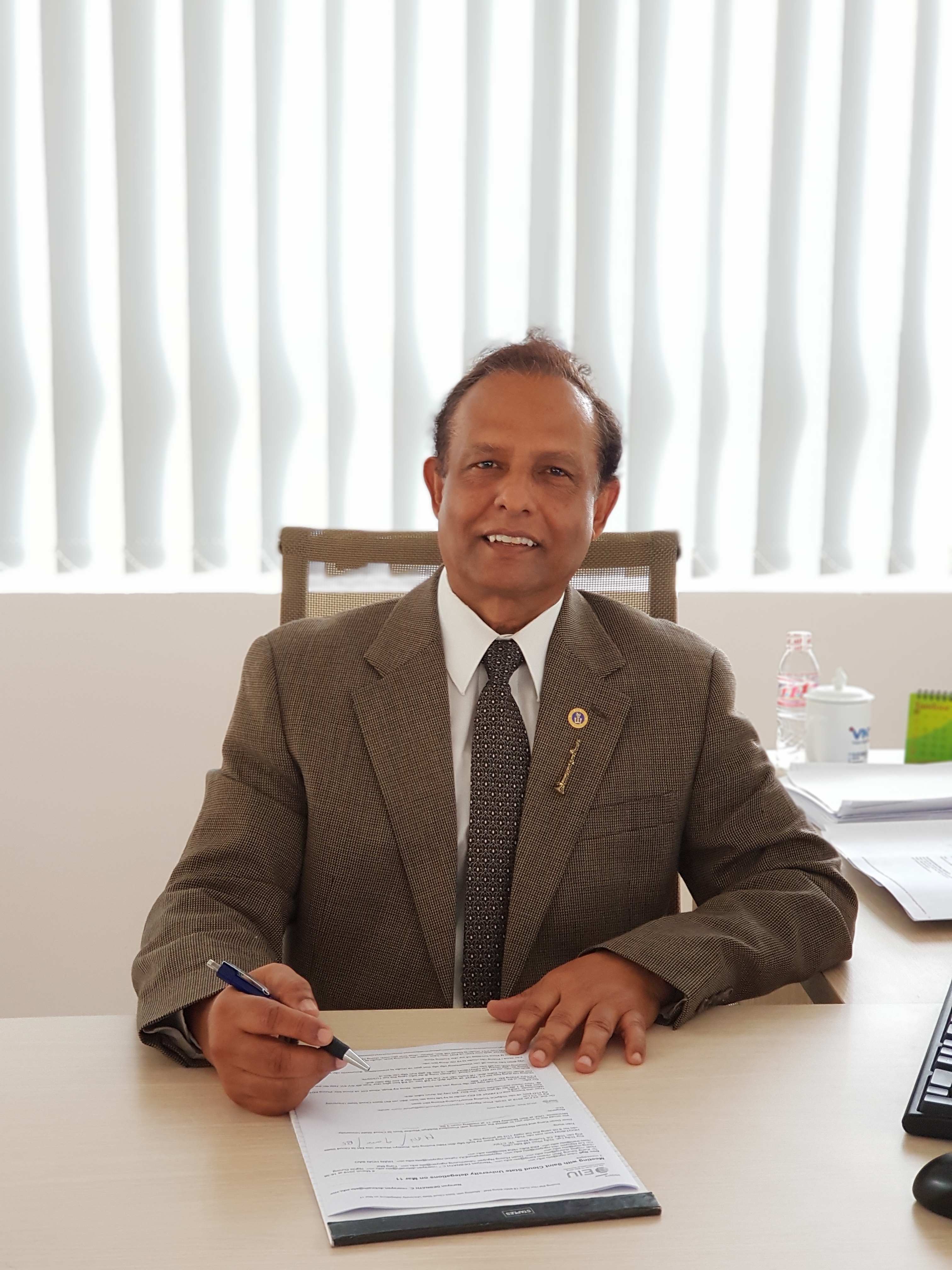
Short Bio: Prof. Narayan C. Debnath is currently the Founding Dean of the School of Computing and Information Technology and also the Head of the Department of Software Engineering at Eastern International University, Vietnam. Prior to coming to Vietnam in his new position, Professor Debnath served the academic institutions in the USA for over 40 years including Minnesota State University, Iowa State University, Ohio State University, and East Carolina University. Dr. Debnath served as a Full Professor of Computer Science at Winona State University, Minnesota, USA for over 28 years, and received numerous Honors and Awards. He served as the elected Chairperson of the Computer Science Department at Winona State University for 7 years. Dr. Debnath was the President of the International Society for Computers and their Applications (ISCA), USA, for two separate terms, and currently the Director of ISCA since 2014. Most recently, Dr. Debnath was awarded the prestigious Honorary Professorship by the Amity University, Noida (Delhi NCR), India.
Prof. Debnath has made original research contributions in Software Engineering, Artificial Intelligence and applications, and Information Science, Technology and Engineering. He is an author or co-author of over 500 research paper publications in numerous refereed journals and conference proceedings in Computer Science, Information Science, Information Technology, System Sciences, Mathematics, and Electrical Engineering. He is also an author of over 20 books published by well-known international publishers including Elsevier, CRC, Wiley, Bentham Science, River Publishing, and Springer. Prof. Debnath has made numerous teaching, research and invited keynote presentations at various international conferences, industries, and teaching and research institutions in Africa, Asia, Australia, Europe, North America, and South America. Dr. Debnath has been a visiting professor at universities in Argentina, China, India, Sudan, and Taiwan. He has been maintaining an active research and professional collaborations with many universities, faculty, scholars, professionals and practitioners across the globe. He is an active member of the IEEE, IEEE Computer Society, and a senior member of the International Society for Computers and their Applications (ISCA), USA.
Keynote Speaker (2)
Integrating (‘Lughat al-Sarsagiyya’) into Arabic GPT Models: Challenges and Opportunities
Abstract: Arabic NLP still struggles with sarcasm detection and dialectal slang such as Lughat al-Sarsagiyya. This presentation focuses on integrating sarcasm-in-fused street language into GPT models by curating annotated corpora and fine-tuning Arabic transformer models. Our approach enhances sarcasm and sentiment analysis, outperforming AraBERT and MARBERT. We highlight sociolinguistic depth as key to improving deep learning in informal, culturally richcontexts. Despite challenges like evolving slang and annotation complexity, incorporating dialectal Arabic opens promising directions for culturally aware AI systems.
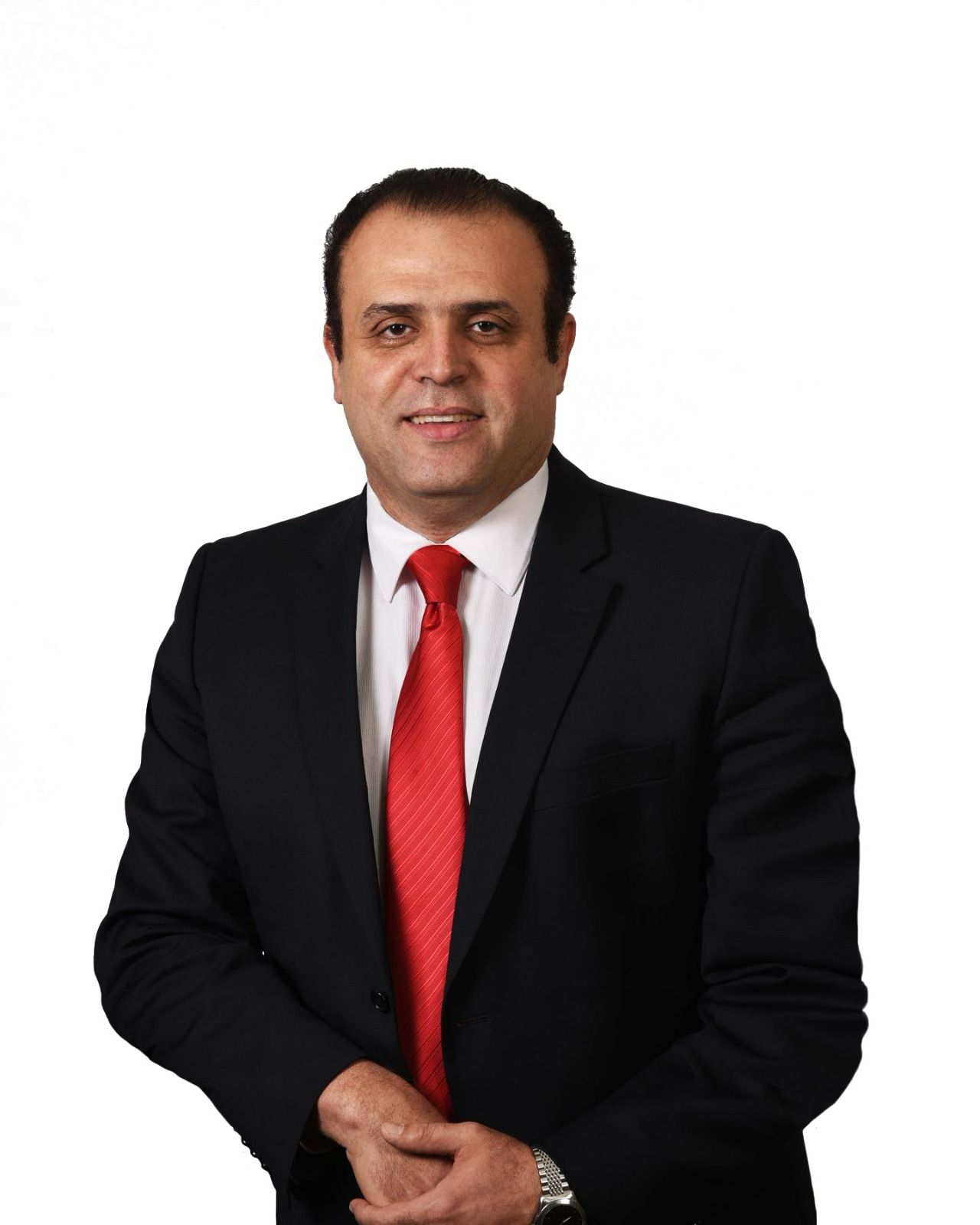
Short Bio: Professor Wael Badawy, Ph.D., P.Eng., SIEEE, SACM Professor Wael Badawy is an internationally recognized leader in computer science, artificial intelligence, and engineering innovation. With over 25 years of experience in academia, industry, and policy advisory, he has made transformative contributions to the fields of embedded systems, cybersecurity, machine learning, system-on-chip (SoC) architecture, and AI governance. His work spans North America, Europe, and the Middle East, bridging theoretical research with real-world applications across diverse sectors. Dr. Badawy holds a Ph.D. degree in Computer Engineering and has held academic and leadership roles in institutions such as the University of Calgary, University of Louisiana, University of Hertfordshire (UK-GAF), Nile University, Badr University, Suez University, and most recently as Program Head of the School of AI at the Egyptian Russian University. He also serves as a Module Leader at London Metropolitan University in the UK. His scholarly output is prolific: over 400 peer-reviewed research papers, 34+ international patents, and more than 50 published books in English and Arabic covering AI, data science, cybersecurity, engineering education, and policy innovation. His publications are widely cited and used in university curricula and industrial design processes globally. Professor Badawy has designed and led award-winning academic programs in AI and cybersecurity that have received international recognition, including being shortlisted for the QS Reimagine Education Awards. His research has influenced public policy, and he currently serves on Egypt’s National Council on Research in Information Technology and Communications and the National Committee on Environmental Issues. A strong advocate for ethical innovation, Prof. Badawy is committed to advancing inclusive, scalable, and responsible AI education. His cross-disciplinary leadership has earned him over 90 awards and honors, including Alberta’s Top 40 Under 40, the Manning Innovation Award, and recognition as one of Canada’s Top CEOs in Fast Growth Technology Companies. In addition to his academic excellence, he is an active entrepreneur and advisor, founding several AI-focused ventures and mentoring youth across multiple continents. He is a licensed Professional Engineer, a Senior Member of IEEE, and a member of ACM and numerous scientific and educational boards. Professor Wael Badawy continues to influence the global dialogue on how emerging technologies can be harnessed ethically and equitably to solve humanity’s most challenges.
Keynote Speaker (3)
New Challenges and Ideas for Text Spotting in Natural Scene Images
Abstract: Text spotting is the detection and recognition of text in natural scene images. This is an emerging topic for real-world applications such as autonomous vehicle driving, person and vehicle identification, image content extraction, multimodal document image processing, tracing people during a marathon, extracting exciting events in sports, and identifying business areas and traffic control. Although several methods have been proposed for addressing the challenges of text spotting in natural scene images, a few challenges remain unsolved, such as arbitrarily-oriented-shaped text spotting, complex background images, occluded text spotting, tiny and dense text, and multi-lingual text spotting. Therefore, this talk discusses new challenges and ideas to address the above challenges. For example, (i) Pixel correlation and Gaussian-driven network for text segmentation, (ii) A new domain independent text spotter, (iii) Hourglass network-based approach for text detection in shaky and non-shakey video frames, (iv) Domain agnostic text recognizer, (v) New expressive and impressive features for personality traits identification and (vi) Personality traits Question Answering.
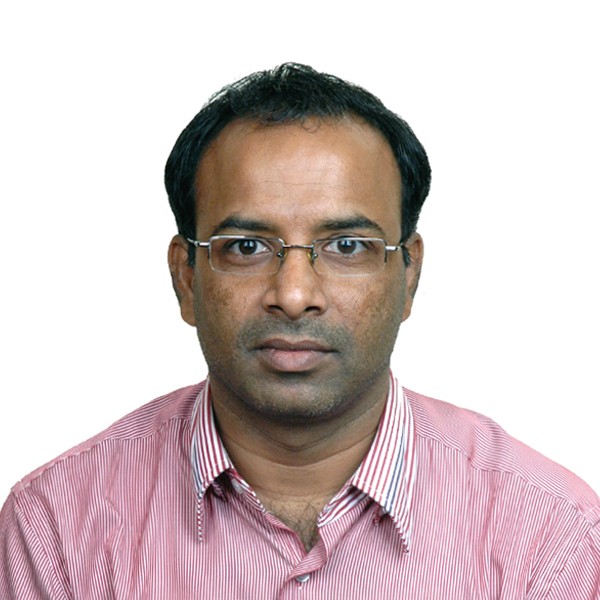
Short Bio: Prof. Shivakumara Palaiahnakote is a computer science lecturer at the University of Salford, UK. He has been recognized as a "Significant Responsibility for Research (SRR)" by the University of Salford. Previously, he was an Associate Professor in the Faculty of Computer Science and Information Technology at the University of Malaya, Kuala Lumpur, Malaysia from 2013-2023. Prior to UM, he also worked as a Research Fellow in the School of Computing at the National University of Singapore from 2008 to 2013 and Research Consultant in the School of Computer Science and Engineering at Nanyang Technological University (NTU), Singapore from 2007 to 2008.
He received a B.Sc., M.Sc. Technology by research, and Ph.D degrees in computer science, respectively in 1995, 2001, and 2005 from the University of Mysore, Mysore, Karnataka, India. He has published more than 350 research papers in national and international conferences and journals. He has been serving as Editor-in-Chief for Artificial Intelligence and Applications (AIA). He has been serving as Screening Editor for Springer Nature of Computer Science (SNCS). He served as Associate Editor for IEEE Transactions on Multimedia (TMM) from 2021-2025. He has been serving as Associate Editor for Pattern Recognition (PR), International Journal on Document Analysis and Recognition (IJDAR), ACM Transactions on Asian and Low-Resource Language Information Processing (TALLIP), Malaysian Journal of Computer Science (MJCS), CAAI-Transactions on Intelligence in Technology and IET-Image Processing.
Keynote Speaker (4)
Using Machine Learning in Network Security: A New Investigation of Adversarial Evasion Attacks
Abstract: Applications of machine learning in network security face the threat of active adversarial attacks in what could be considered an arm’s race between attackers and defenders. Adversaries constantly probe machine learning systems with inputs which are explicitly designed to bypass the system and induce a wrong prediction. In the first part of this talk, we classify adversarial attacks in network security and introduce the problem space vs. feature space classification model. In the second part, we present our investigations into different defence methods against adversarial attacks to address difficulties in defending against these attacks, including the lack of labelled data, concept drift, and whether a general defence is possible. In the final part, we present our ongoing work into practicality of adversarial attacks against ML-based NIDS in-depth. We present three distinct contributions: identifying numerous practicality issues for evasion adversarial attacks on ML-NIDS using an attack tree threat model, introducing a taxonomy of practicality issues associated with adversarial attacks against ML-based NIDS, and investigating how the dynamicity of some real-world ML models affects adversarial attacks against NIDS. While adversarial attacks can compromise ML-based NIDSs, our aim is to highlight the significant gap between research and real-world practicality in this domain, warranting attention.
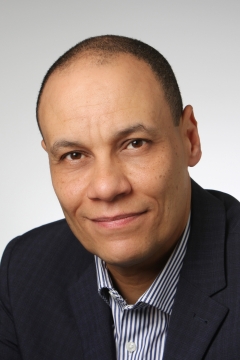
Short Bio: Dr. Ashraf Matrawy is a Professor at the School of Information Technology, Carleton University. He is a senior member of the IEEE and licensed Professional Engineer in Ontraio. He leads the Next Generation Networks Group at Carleton. He served as a Network co-Investigator of Smart Cybersecurity Network (SERENE-RISC) in Canada. His research interests include AI for network security and reliable and secure computer networking. Dr. Matrawy has won multiple awards for his contributions to network security research and education. He served as associate director for the School of Information Technology for three and a half years. In addition to his academic work, he worked and consulted for both Canadian Government and Industry including Industry Canada, TELUS Communications, and Irdeto.
Keynote Speaker (5)
A Q-Learning based Approach for ELECTRIC VEHICLE CHARGING RECOMMENDATIONS
Abstract: The adoption of electric vehicles (EVs) represents a pivotal shift towards sustainable mobility, yet the challenge of efficient charging station recommendations persists, influencing user convenience and EV uptake. This study introduces a novel approach utilizing Q-learning for simulating EV charging station recommendations, aiming to optimize the matching process between EVs and charging infrastructure. By integrating Markov decision processes with Q-learning algorithms, we dynamically adapt recommendations to user behaviours and preferences, significantly enhancing recommendation accuracy and personalization. The methodology involves constructing a simulation environment to model EV charging behaviour, evaluating the performance of the Q-learning based recommendation system under various scenarios. Results demonstrate the effectiveness of this approach in identifying optimal charging strategies, thus contributing to improved user satisfaction and charging station utilization. The findings underscore the importance of innovative technological integration for addressing the complexities of sustainable urban mobility.
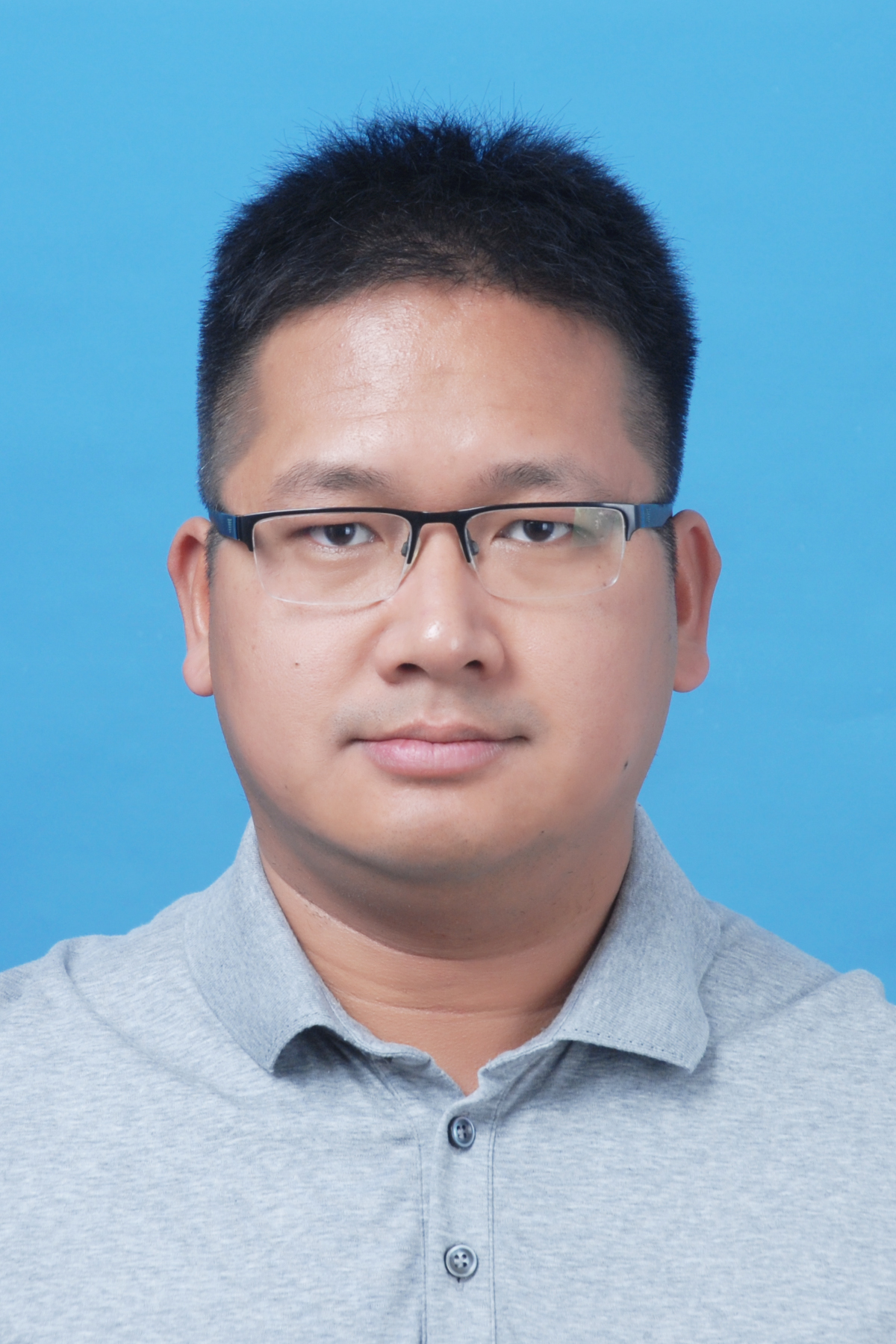
Short Bio: Mincong Tang received his Ph.D. in 2011 from the Department of Decision Sciences and Managerial Economics at The Chinese University of Hong Kong. From 2012 to 2014, he conducted postdoctoral research at the School of Economics and Management, Beijing Jiaotong University. He is currently a researcher at the International Research Center for Informatics Research (ICIR) at Beijing Jiaotong University and serves as a visiting professor at Industrial University of Ho Chi Minh City (Vietnam). His primary research areas include information systems and e-commerce, supply chain and logistics management, artificial intelligence, intelligent transportation systems, and the optimization and simulation of operations and service systems. In recent years, he has published over 30 papers in international journals such as the International Journal of Simulation Modelling, International Journal of Computers, Communications and Control, IEEE Transactions on Fuzzy Systems, IEEE Transactions on Consumer Electronics, Advances in Production Engineering and Management, Applied Soft Computing, Future Generation Computer Systems, Studies in Informatics and Control, International Journal of Information Technology and Decision Making, Information & Management, Information Technology and Management, and Informatica etc. He currently serves as an editor for several journals, including the Journal of Global Information Management, International Journal of Computers, Communications and Control, Journal of Electronic Commerce in Organizations, and Journal of Computing and Information Technology.
Keynote Speaker (6)
AI for social good and responsible innovation
Abstract: As artificial intelligence becomes more deeply embedded in the tools we use every day, the way we work, learn, and lead is changing fast. In this talk, we’ll explore how AI can help individuals and organizations unlock new levels of productivity—not by replacing people, but by augmenting their potential. Drawing on real-world examples, I’ll share strategies for building responsible, human-centered AI systems that drive results while supporting growth, inclusion, and transparency.
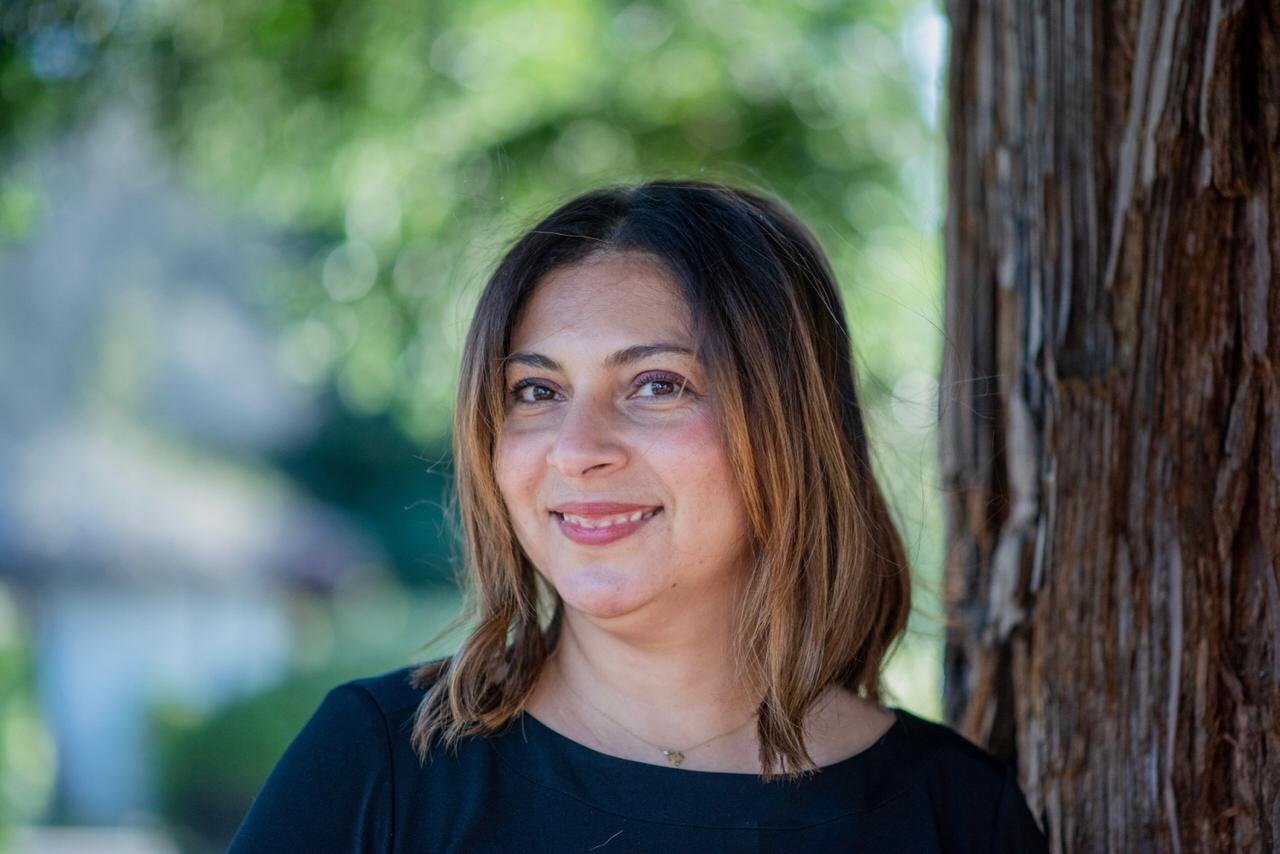
Short Bio: Dr. Noha Elfiky is an accomplished academic leader and Associate Professor of Business Analytics and Data Science at Saint Mary’s College of California. She most recently served as Associate Dean of Undergraduate Programs, where she led strategic initiatives across curriculum redesign, program accreditation, and institutional effectiveness. Her leadership was instrumental in the successful quarter-to-semester transition for graduate programs and the launch of stackable STEM-aligned certificates—efforts directly aligned with the college’s Transformation 2028 strategic plan. With a Ph.D. in Computer Vision and Artificial Intelligence, Dr. Elfiky brings a rare blend of technical depth and administrative leadership. Her experience spans postdoctoral research at Purdue University, Visiting Scientist work at Lawrence Livermore National Lab, and principal roles in accreditation efforts tied to WSCUC and AACSB standards. She has led Assurance of Learning (AoL) activities across multiple programs and has served on core committees shaping assessment, curriculum, and strategic planning. Dr. Elfiky is also a recognized voice in the ethical application of AI. Her research explores machine learning, computer vision, and algorithmic fairness, with publications in top journals and international conference proceedings. She is frequently invited to speak on topics including AI for social good, algorithmic bias, and inclusive innovation.
© AMLTA2025. All Rights Reserved.